
From Photoshop to projection lamps to machine learning, every new tool sparks the same fear. The truth? Creativity still belongs to the people holding the brush.
AI models that can generate images, videos, text, and even 3D models have been with us for a while now. Every week I am amazed by how fast they evolve. Not long ago, I had to count the number of fingers on each hand and the legs on each chair. Today, that is no longer an issue. Tomorrow, the models will solve problems we have not even noticed yet.
When people talk to me about AI and creativity, the conversation often jumps to extremes.
Some say it marks the end of creative work as we know it. Others celebrate it as the beginning of limitless imagination.
From my seat as an art director, it feels simpler than that.
AI is a tool, another in a long line of tools we have learned to master. It is powerful, yes, but it is still a tool. And like any other, it requires understanding, restraint, and taste.
When Photoshop arrived, people said it would cheapen illustration.
When 3D software became mainstream, they warned it would kill draftsmanship.
Even Norman Rockwell, one of America’s most beloved illustrators, used a Balopticon projector to compose his scenes. For years he kept it quiet, worried people would call him a cheat. Yet decades later, his work still defines what we call “classic.” The tools changed, but the craft did not.
The same is true today.
Our creative teams are able to stay small while executing big ideas, and that is largely thanks to the tools we now have access to. With AI woven into our workflow, we can bring complex worlds to life faster than ever. We can iterate, test, and refine ideas at a pace that used to take months.
But make no mistake, AI did not replace our creative people. It expanded their reach. It gave them a wider sandbox. It allowed us to explore ten directions before lunch and still have time to pursue the best one.
What has not changed is the need for taste and judgment.
Even with a thousand AI drafts in front of me, I still ask the same questions:
Does the composition hold?
Do the values carry the eye?
Do the colors harmonize or fight each other?
The fundamentals have not gone anywhere. If anything, they matter more than ever. They are the lens that turns overwhelming output into meaningful work.
And beyond those fundamentals, the skills that define effective creative people remain entirely human.
The ability to learn how to learn.
To think critically about what you see.
To stay curious in the face of endless possibilities.
To tell stories that make people feel something.
AI can generate content, but only you can decide what matters.
AI can imitate style, but only you can choose if that style fits the story you are telling.
Those micro-decisions, thousands of them every day, are still what define great creative work.
This is why I see AI as part of the continuum of creativity, not a break from it. Every generation of creative people has faced new tools that seemed threatening at first. Cameras once terrified painters. Digital tools once worried illustrators. Now AI unsettles us in its own way. But each time, what survived was not the tool. It was the human behind it; the vision, the taste, the story.
There are pitfalls. The temptation to take shortcuts. The risk of leaning too heavily on AI (looking at you thousands of GPT yellow images). The danger of mistaking abundance for quality. That is why the responsibility still falls on us to use the tool with intention.
AI is not the end of creativity.
Nor is it the mythical one-button creative solution.
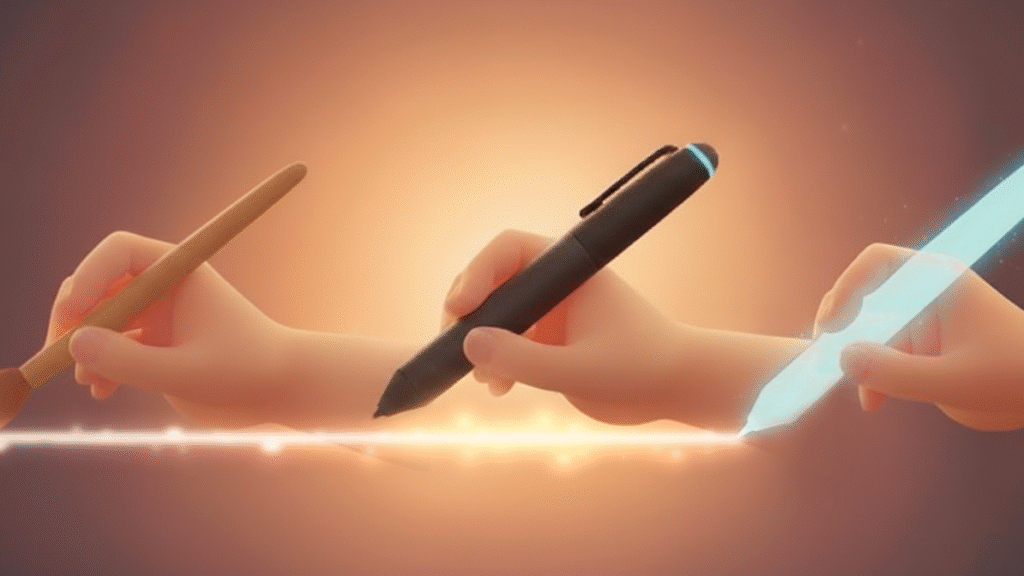
It is just another brush in the box. You can choose to use it. You can also choose not to. Like every brush that came before it, its value depends entirely on the hands that hold it.
In the hands of creative people who keep learning, who question, explore, and imagine, it becomes something extraordinary.
Because tools do not create creativity.
Creative people do.
Agree or disagree? Reach out on LinkedIn and let’s have a conversation.
And because I know you were looking for it — here’s your one em dash.
Fernando Guardiola, Sr Art Director.